
The Deccan: Plateau, Region And Cultural Crossroads
The Deccan is best understood as both a physical region and a civilisational space. In geography, it refers to the large plateau that forms much of peninsular India. In history and travel writing, it also points to a wider cultural zone where Marathi, Kannada, Telugu, Tamil, Malayalam, Konkani, Dakhani Urdu and many other traditions have interacted for centuries.
At a glance
The Deccan is the broad peninsular plateau of India south of the northern river plains, framed by the Western and Eastern Ghats and linked by major river systems, historic cities, sacred sites, food traditions and varied landscapes.
For a visitor, student or business reader, the Deccan offers a practical way to understand southern and south-central India beyond single-state boundaries. Its cities, hill ranges, river basins, forts, cave temples, pilgrimage centres, agricultural landscapes and technology hubs are connected by the same highland geography, even when local identities remain distinct.
Where The Deccan Is Located
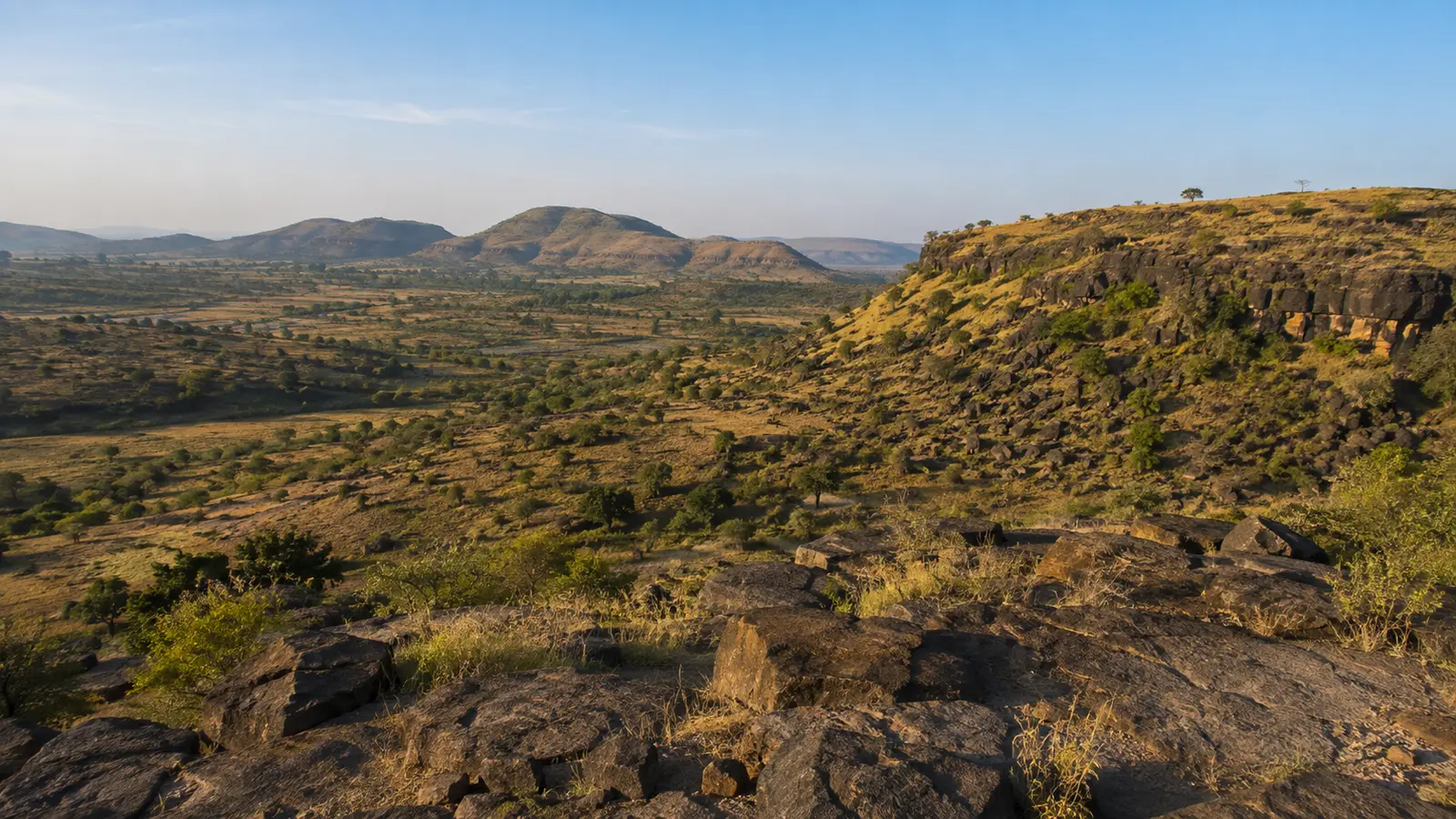
The plateau lies mainly across Maharashtra, Telangana, Karnataka and Andhra Pradesh, with adjoining portions commonly discussed in parts of Tamil Nadu, Kerala and Goa. NCERT’s physical geography account places the Peninsular Plateau around the old, stable landmass of India and describes the Western and Eastern Ghats as important edges of this highland system.
The Western Ghats rise sharply along the Arabian Sea side, while the Eastern Ghats are more broken and lower toward the Bay of Bengal. The plateau generally slopes from west to east, which is why major rivers such as the Godavari, Krishna and Kaveri flow across the peninsula toward the Bay of Bengal.
| Feature | What it helps explain |
|---|---|
| Western Ghats | A high western edge, strong monsoon influence and forested hill landscapes. |
| Eastern Ghats | Discontinuous hill ranges linked with river valleys and coastal approaches. |
| Black basalt soils | Agriculture in parts of Maharashtra, Telangana and Karnataka, especially cotton and dryland crops. |
| River basins | Long-distance settlement, irrigation, pilgrimage routes and urban growth. |
| Granite and boulder terrain | Distinctive fort, temple and settlement landscapes in parts of Karnataka and Telangana. |
Why The Deccan Matters
The Deccan matters because it connects natural history with human history. The north-western Deccan is associated with the Deccan Traps, a vast basalt formation created by ancient volcanic activity. This geological base influenced soils, water storage, building materials and the rugged visual character of many plateau landscapes.
It also matters because the region has supported major political and cultural formations. The Satavahanas, Chalukyas, Rashtrakutas, Kakatiyas, Hoysalas, Vijayanagara rulers, Bahmani kingdom, Deccan sultanates, Maratha powers, Mysore kingdom and Hyderabad State all left marks on architecture, language, trade and memory. No single dynasty defines the Deccan; its importance lies in the layering.
- For travellers, it offers caves, forts, temple towns, hill stations, wildlife areas, food circuits and urban heritage.
- For students, it shows how geography, climate, language and political history shape a region over time.
- For businesses, it includes major contemporary corridors around Mumbai, Pune, Hyderabad, Bengaluru, Chennai-linked routes and many tier-two cities.
- For international readers, it explains why southern India cannot be reduced to one climate, language or cultural pattern.
Heritage, Cities And Living Culture
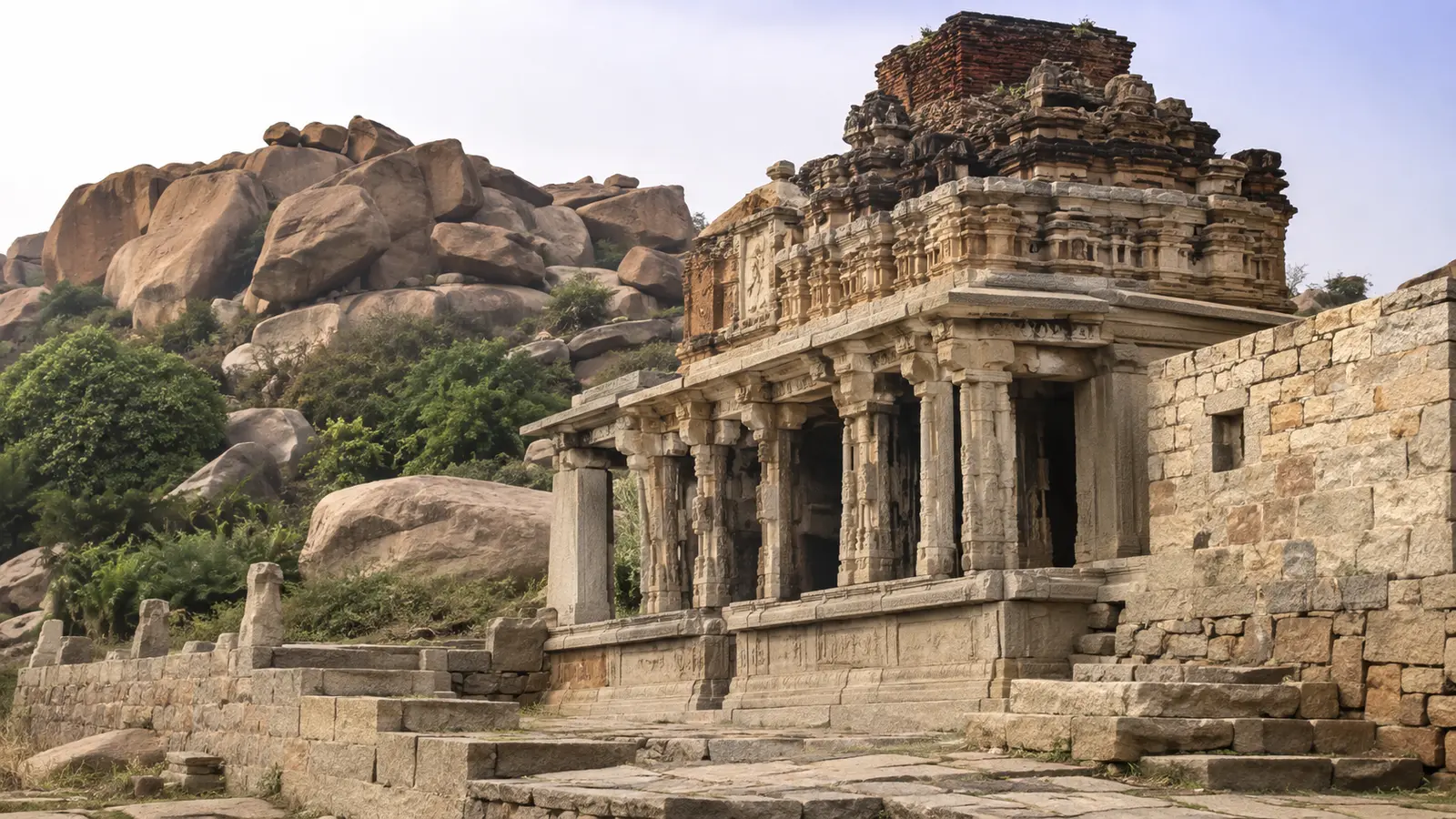
The Deccan’s heritage is visible in rock-cut caves, granite temple complexes, Islamic and Indo-Islamic courtly architecture, hill forts, market streets and living pilgrimage places. UNESCO lists Hampi in Karnataka as a World Heritage property associated with the Vijayanagara capital, and records its inscription in 1986. UNESCO also lists Ajanta and Ellora in Maharashtra, both inscribed in 1983, for their major rock-cut artistic and religious traditions.
These sites should not be treated only as photo stops. Ajanta is closely associated with Buddhist art and monastic spaces. Ellora brings Buddhist, Hindu and Jain monuments into one long rock-cut sequence. Hampi combines sacred, royal, civic and military remains with the Tungabhadra landscape. Golconda, Bidar, Bijapur and Hyderabad add another Deccan story of sultanate and later court cultures, including architecture, textiles, metalwork, poetry and cuisine.
Food is one of the easiest ways to notice this diversity. Hyderabadi biryani, jowar and bajra bhakri, Karnataka meals, Andhra and Telangana spice traditions, coastal influences near Goa and Kerala, and Tamil and Marathi foodways all sit within or beside Deccan travel routes. The result is not one standard cuisine but a family of regional food cultures shaped by grain, climate, trade and courtly history.
Cultural forms to notice
- Yakshagana in coastal and Malnad Karnataka, with music, costume and epic storytelling.
- Kuchipudi from Andhra Pradesh, a classical dance tradition with roots in performance and devotion.
- Lavani in Maharashtra, known for expressive performance and rhythmic energy.
- Bathukamma in Telangana, a floral festival strongly associated with women and seasonal community celebration.
- Bidriware from Bidar, a metal inlay craft connected with Deccan courtly taste.
Nature, Wildlife And Travel Context
Nature in the Deccan ranges from dry scrub and black-soil plains to coffee hills, waterfalls, river valleys and forested protected areas. The Western Ghats, inscribed by UNESCO in 2012, are recognised for high biodiversity and for their influence on India’s monsoon patterns. They run parallel to the western coast and touch the travel geography of Maharashtra, Goa, Karnataka, Kerala and Tamil Nadu.
Popular travel names such as Coorg, Chikkamagaluru, Hampi, Hyderabad, Bidar, Munnar, Araku Valley and Kodaikanal do not all represent the same landscape. Some are plateau interiors, some sit on highland edges, and some belong to hill systems that interact with the Deccan rather than sitting at its core. A good Deccan itinerary therefore works by region and season, not by simply collecting famous names.
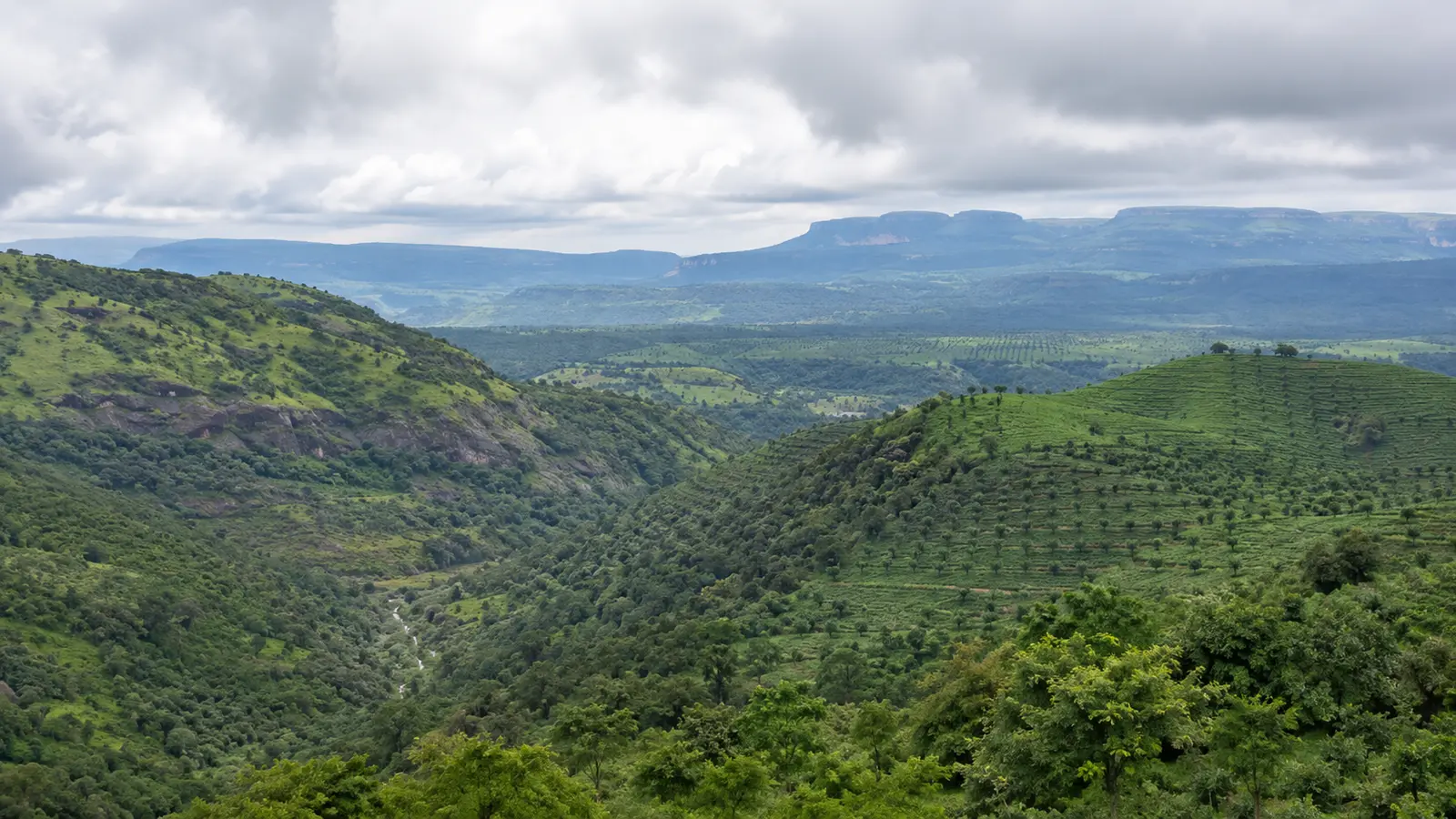
Plan Deccan travel with distances in mind. Plateau roads can be long, summer heat can be intense inland, and monsoon conditions vary sharply between the Ghats, rain-shadow areas and coastal approaches.
How To Plan A Deccan Visit
- Choose a focus first: heritage, food, nature, pilgrimage, architecture, wildlife or urban culture.
- Group nearby places by state or river basin instead of jumping across the whole plateau.
- Check the season: October to February is usually easier for many heritage circuits, while monsoon travel is best planned with local road and weather updates.
- Respect site rules at caves, temples, forts and protected areas; some places restrict photography, footwear, bags or entry timings.
- Keep local languages and customs in mind. English and Hindi may work in major cities, but regional languages are central to everyday life.
For wider destination context, return to Notable Destinations and compare the Deccan with other major travel regions of India.
Important Cautions And Limits
The word Deccan is used in more than one way. A geographer may define it by landforms, a historian by political frontiers, and a traveller by practical routes across south-central India. This page uses the term as a broad, reader-friendly guide, while recognising that every state and community within the region has its own identity.
Avoid assuming that every Deccan site is ancient, every landscape is dry, or every cultural expression belongs to the same language group. The region includes old and new cities, drought-prone districts and lush hill slopes, Hindu, Buddhist, Jain, Islamic, Christian and local community histories, and both rural and globalised urban economies.
Frequently Asked Questions
Is the Deccan the same as South India?
No. The Deccan overlaps with much of peninsular and south-central India, but South India is a broader cultural and political term. Some coastal and far-southern areas are closely connected to the Deccan but are not always described as plateau interiors.Which states are most associated with the Deccan?What are the best-known Deccan heritage places?When is a comfortable time to travel in the Deccan?
Which states are most associated with the Deccan?
Maharashtra, Karnataka, Telangana and Andhra Pradesh are strongly associated with the Deccan Plateau. Parts of Tamil Nadu, Kerala and Goa may also be included depending on the definition being used.
What are the best-known Deccan heritage places?
Hampi, Ajanta, Ellora, Golconda, Bidar and Bijapur are among the best-known names. Each belongs to a different historical setting, so it is better to understand them as connected Deccan heritage rather than as one uniform story.
When is a comfortable time to travel in the Deccan?
Many inland heritage routes are more comfortable from October to February. Monsoon months can be beautiful in the Ghats and hill regions, but travellers should check local road, rainfall and site conditions before planning.