
India's Legacy: Reading a Long Civilisation with Evidence
India's legacy is not a single dynasty, a single religion, a single language or a single region. It is a layered civilisational record built from prehistoric settlements, river systems, farming communities, trade routes, city cultures, kingdoms, empires, local republics, philosophical schools, devotional traditions, craft lineages, courtly art, maritime connections and everyday household practices. A good Legacy page should help a reader see that Indian history is both ancient and continuously interpreted. It is not only about grand monuments; it is also about tools, pottery, inscriptions, manuscripts, village memories, pilgrimage routes, coins, maps, languages, food habits and inherited ways of organising social life.
The Legacy section on India.co.in is the right place for readers who want a guided starting point before moving into deeper pages such as History, Pre-Historic India, Vedic Period, Maps, Ashoka and Alexander the Great. These pages cover very different kinds of material, but they are connected by one basic question: how do we understand India over a long span of time without reducing it to oversimplified stories? The answer is to read history through evidence, context and multiple regional experiences.
What makes India's legacy valuable to understand
For common readers in India, legacy helps explain why places, festivals, names, scripts and customs differ so widely from one state to another. For students, it provides a framework for connecting classroom topics with archaeological sites, inscriptions, literary works and maps. For families and community readers, it makes local history feel part of a larger national story. For businesses, investors and foreign institutions, understanding India's legacy helps explain regional identity, public sentiment, cultural calendars and the importance of respectful communication when operating in India.
Legacy also reminds readers that India's past is not frozen. A monument may be ancient, but the way people visit it, protect it, debate it and learn from it changes over time. A text may be old, but its meaning is shaped by commentaries, translations and social context. A map may show an empire, a port or a pilgrimage network, but it also points to movement: of merchants, monks, soldiers, craftspeople, languages, crops and ideas. This is why Indian legacy should be read as a continuing conversation between evidence and memory.
Major threads in the Legacy section
| Thread | What it helps readers understand |
|---|---|
| Pre-history and archaeology | Early human life, tools, rock art, settlements, food systems and the evidence that existed before written records. |
| Vedic and early textual traditions | Language, ritual, social ideas, oral transmission and the need to distinguish text, interpretation and historical setting. |
| Maps and geography | How rivers, mountains, coasts, routes and changing political boundaries shaped Indian history. |
| Ashoka and inscriptions | Statecraft, ethical communication, Buddhism, governance and the use of inscriptions as public records. |
| External encounters | Contacts with Central Asia, the Mediterranean world and other regions through trade, conflict, diplomacy and ideas. |
How to read ancient and early Indian history responsibly
A responsible reading of India's legacy uses more than one type of evidence. Archaeology tells us what people built, used, buried, traded and left behind. Epigraphy helps us read inscriptions that recorded donations, royal orders, religious acts or administrative information. Literature preserves ideas and memory, but it must be read with attention to language, genre and the period in which it was composed or transmitted. Art history helps us understand symbols, materials, patronage and regional styles. Geography explains why some regions became political centres, ports, pilgrimage routes or agricultural heartlands.
Readers should also remember that India has many pasts. The history of the Deccan, the North-West, Bengal, Tamil regions, the Himalayan belt, the North-East, the western coast and the Gangetic plains does not move in one identical rhythm. Some periods are better documented in one region than another. Some communities preserved knowledge orally rather than through inscriptions. Some historical memories are associated with sacred geography rather than court records. A good Legacy overview makes space for this diversity rather than forcing every region into a single sequence.
Why monuments, maps and names matter
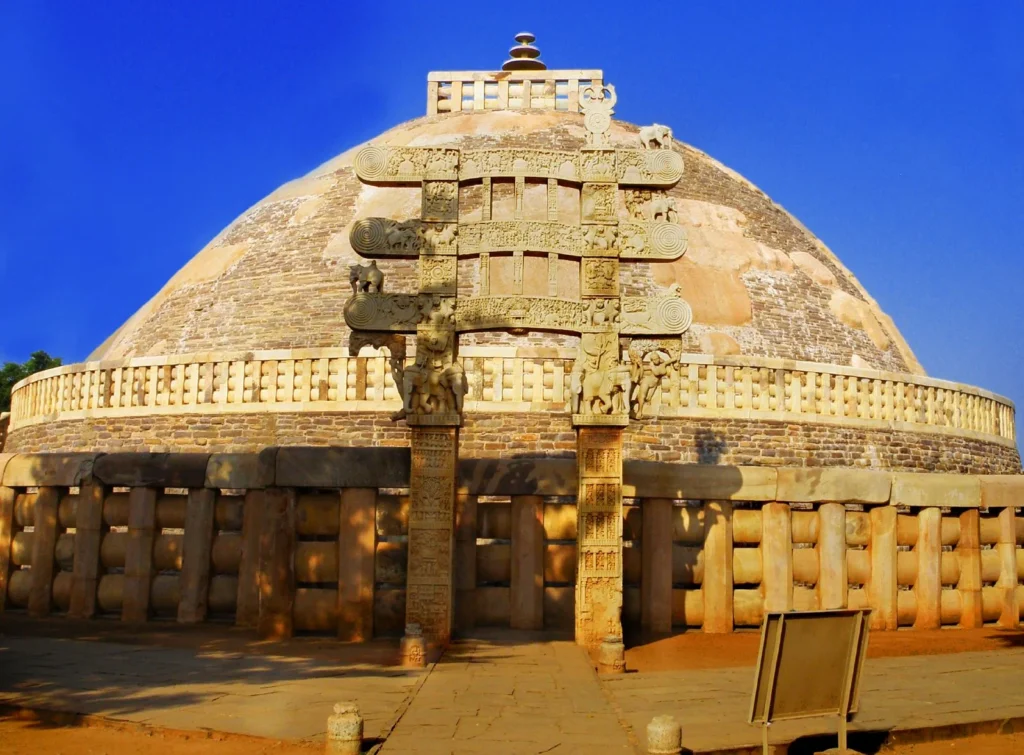
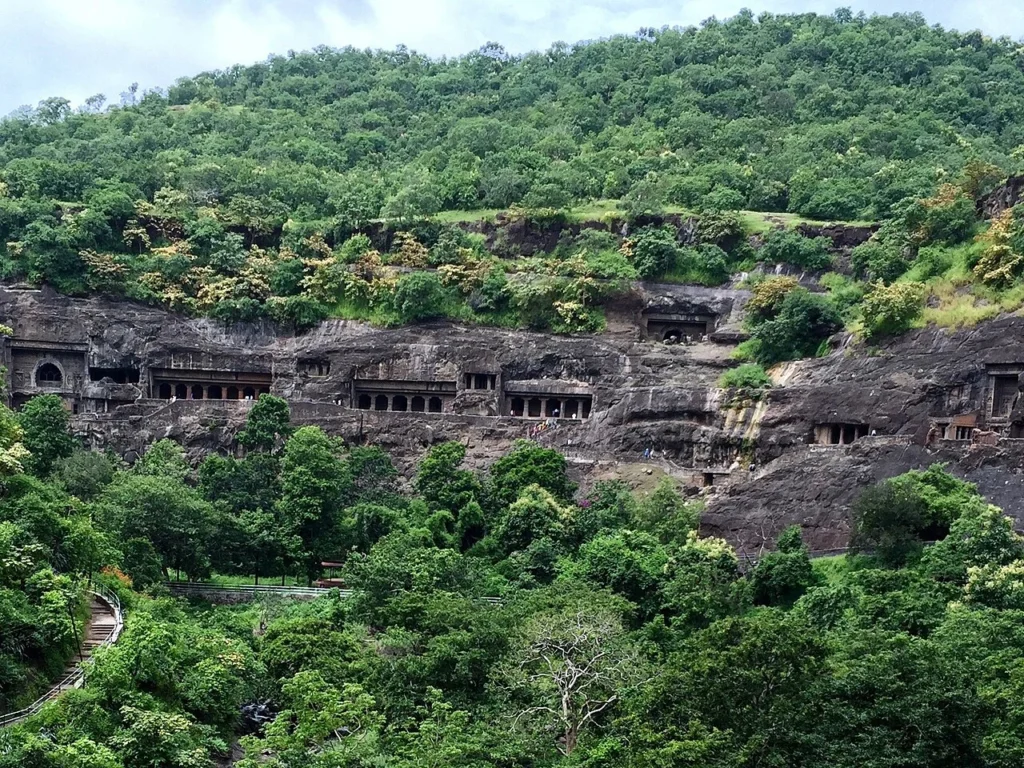
Monuments such as stupas, caves, forts, temples, mosques, stepwells, tombs and old city walls are not just tourist places. They are public records made of stone, brick, paint, metal, wood and landscape. They show engineering skill, artistic taste, religious practice, patronage and local labour. When a reader looks at Sanchi, Ajanta, Hampi or any protected site, the immediate visual beauty is only the beginning. The deeper value comes from asking who built it, who used it, what routes connected it, what language appears in inscriptions, and how conservation protects it today.
Maps are equally important. A historical map does not merely show territory; it shows imagination, power and movement. The same region may appear differently in a political map, a pilgrimage map, a linguistic map, a trade map or an archaeological map. For young readers, maps help connect rivers, cities, kingdoms and routes. For researchers and foreign readers, maps show why India's regional identities remain so strong even within a national framework.
Reader note
Legacy content is most useful when treated as an introduction, not a final verdict. For academic work, travel planning or official interpretation of protected monuments, always use verified sources such as ASI material, museum catalogues, scholarly books and official visitor information.
A practical reading path
- Start with the History page for a broad narrative before moving to period-specific topics.
- Read Pre-Historic India to understand evidence before writing and inscriptions became common.
- Use the Vedic Period page to approach early textual traditions with historical context.
- Use Maps to connect political history with rivers, trade routes, terrain and regional change.
- Read Ashoka and Alexander the Great as case studies of empire, encounter, evidence and interpretation.
FAQs
Is Indian legacy the same as Indian heritage?
They overlap, but they are not identical. Legacy is the inherited record of the past, including ideas, institutions, sites and memory. Heritage is the part of that inheritance that communities, institutions and the public actively preserve, practise, visit or pass on.
Why are there different versions of Indian history?
Different sources answer different questions. Archaeology, inscriptions, literature, local memory and foreign accounts may emphasise different things. Responsible history compares sources and explains uncertainty rather than hiding it.
How can students use this section?
Students can use it as a map of topics. Begin with broad pages, then make notes on evidence, dates, regions, key terms and open questions. For exams or research submissions, cross-check with textbooks and official or academic sources.