
New Delhi’s Iron Pillar
Preserving the Enigmatic Iron Pillar of New Delhi: A Marvel of Ancient Metallurgy
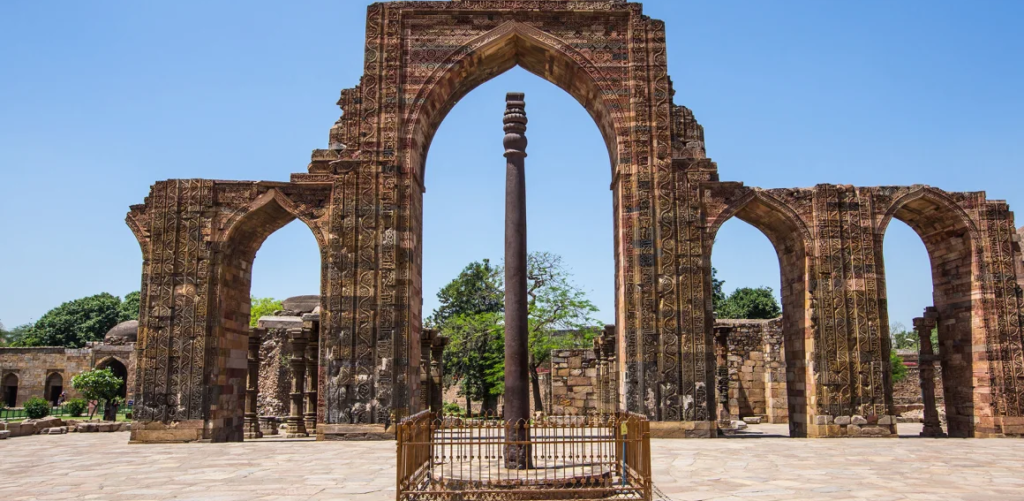
In the heart of New Delhi’s bustling urban landscape lies a silent sentinel to the ingenuity of ancient civilizations – the Iron Pillar. Standing tall amidst the UNESCO-listed Qutb Minar complex, this enigmatic structure has stood the test of time for over 1,600 years, defying the ravages of rust and decay.
Preserving the Enigmatic Iron Pillar of New Delhi: A Marvel of Ancient Metallurgy
In the heart of New Delhi’s bustling urban landscape lies a silent sentinel to the ingenuity of ancient civilizations – the Iron Pillar. Standing tall amidst the UNESCO-listed Qutb Minar complex, this enigmatic structure has stood the test of time for over 1,600 years, defying the ravages of rust and decay.
Unraveling the Mystery:
The Iron Pillar, a towering 7.2-meter structure weighing six tons, is a striking anomaly in the annals of metallurgy. While iron structures typically succumb to corrosion over time, this ancient pillar remains virtually untouched by rust. Its pristine condition has baffled scientists and historians alike, sparking decades of inquiry into its secrets.
A Triumph of Ancient Metallurgy:
In 2003, researchers from the Indian Institute of Technology (IIT) Kanpur unlocked the pillar’s secret, shedding light on its remarkable durability. Analysis revealed that the pillar, primarily composed of wrought iron, boasts a high phosphorus content and lacks sulfur and magnesium – key factors in its resistance to corrosion. Additionally, ancient craftsmen employed a technique known as “forge-welding,” preserving the high phosphorus content and enhancing the pillar’s strength.
The Legend Lives On:
Beyond its metallurgical marvels, the Iron Pillar is steeped in myth and legend. Some accounts attribute its construction to the Gupta Empire, while others suggest its association with eminent figures like Varāhamihira and Raja Anangpal. Regardless of its origins, the pillar holds a revered place in Indian folklore and literature, immortalized in epic poems and ancient texts.
Cultural Significance and Preservation:
Today, the Iron Pillar serves as more than a testament to ancient craftsmanship; it is a symbol of India’s rich cultural heritage. Visitors flock to the Qutub Minar complex, drawn by the pillar’s mystique and spiritual significance. However, to protect this historic marvel, the Archeological Survey of India (ASI) has erected a fence around it, minimizing human impact and ensuring its preservation for future generations.
Looking to the Future:
As conservation efforts continue, the Iron Pillar offers valuable insights into sustainable material practices and indigenous knowledge. Conservation architect Pragya Nagar emphasizes the importance of leveraging ancient techniques for modern sustainability, highlighting the pillar’s potential as a catalyst for innovation in material science.
Why Visit the Iron Pillar?
The Iron Pillar offers a unique opportunity to witness one of the world’s most celebrated achievements in ancient metallurgy. Historians, engineers, scientists, and curious travelers continue to study the monument’s remarkable composition and craftsmanship. Its enduring condition provides a fascinating glimpse into the technological sophistication of ancient India.
Best Time to Visit
The most comfortable period for sightseeing in Delhi is from October to March, when temperatures are cooler and outdoor exploration is more enjoyable. Early morning and late afternoon visits offer pleasant weather and excellent lighting for photography.
Photography Tips
The Iron Pillar is surrounded by significant medieval architecture, creating excellent opportunities for photographs. Wide-angle shots can capture both the pillar and nearby monuments, while morning and evening light often enhance the visual appeal of the site. Since the pillar is protected by a fence, visitors should plan photography angles accordingly.
Nearby Attractions Within the Complex
A visit to the Iron Pillar can easily be combined with other important monuments in the Qutb Minar complex, including:
- Qutb Minar
- Quwwat-ul-Islam Mosque
- Alai Darwaza
- Alai Minar
- Historic tombs and archaeological remains from the Delhi Sultanate period
Together, these monuments provide an immersive introduction to more than a thousand years of Delhi’s architectural and cultural history.
Visitor Etiquette
To protect this priceless heritage monument, visitors are encouraged to respect all conservation measures, remain within designated pathways, and avoid touching protected structures. These efforts help preserve the Iron Pillar and surrounding monuments for future generations.
Suggested Visit Duration
Allow between 1.5 and 2.5 hours to comfortably explore the Iron Pillar and the surrounding monuments, read interpretive displays, and enjoy photography opportunities throughout the complex.