
Hyderabad: City of Pearls
Hyderabad is the capital of Telangana and one of India’s major metropolitan centres. The city developed on the Deccan Plateau around the Musi River and today combines an older urban core of forts, palaces, bazaars and long-established neighbourhoods with large districts devoted to technology, research, education, healthcare and modern services.
At a glance
Hyderabad includes the historic quarters around Charminar, areas associated with Secunderabad, established residential neighbourhoods, and the western business corridor around Madhapur, HITEC City and Gachibowli. Travel distances can be substantial even when destinations are described simply as being ‘in Hyderabad’.
- State: Hyderabad is the capital of Telangana.
- Founded: Muhammad Quli Qutb Shah established the city in 1591.
- Setting: an inland plateau landscape of granite, lakes and low hills.
- Known for: Charminar, Golconda Fort, Hyderabadi cuisine, technology and life sciences.
- Languages: Telugu and Urdu are culturally important; Hindi and English are also widely understood.
Population figures require care because ‘Hyderabad’ can mean the municipal area, district, urban agglomeration or wider metropolitan region. Census 2011 remains the latest completed official census for detailed city-level comparison; newer estimates may use different boundaries.
History and civic identity
Hyderabad was founded in 1591 by Muhammad Quli Qutb Shah, the fifth ruler of the Qutb Shahi dynasty. The new city grew east of the fortified settlement of Golconda, and Charminar became its best-known landmark. Qutb Shahi patronage influenced the city’s architecture, water systems, language, literature and court culture.
The Mughal Empire took control of Golconda in 1687. In the eighteenth century, the Asaf Jahi dynasty established an autonomous state under rulers commonly known as the Nizams. Hyderabad later served as the capital of the princely State of Hyderabad and developed important administrative, educational, medical and cultural institutions.
After Indian independence, Hyderabad State was integrated into the Indian Union in 1948, and became the capital of Andhra Pradesh when that state was formed in 1956. Telangana was created as a separate state on 2 June 2014. Section 5 of the Andhra Pradesh Reorganisation Act, 2014 provided for Hyderabad to serve as the common capital of Telangana and Andhra Pradesh for a period not exceeding ten years. That transitional period has ended, and Hyderabad is the capital of Telangana.
The city’s identity reflects this layered history. Telugu and Urdu traditions are especially influential, while migration and international connections have added further languages and customs. Its architecture, food, festivals and neighbourhoods combine Deccani, Persianate, Telugu, pan-Indian and global influences.
Geography, lakes and climate
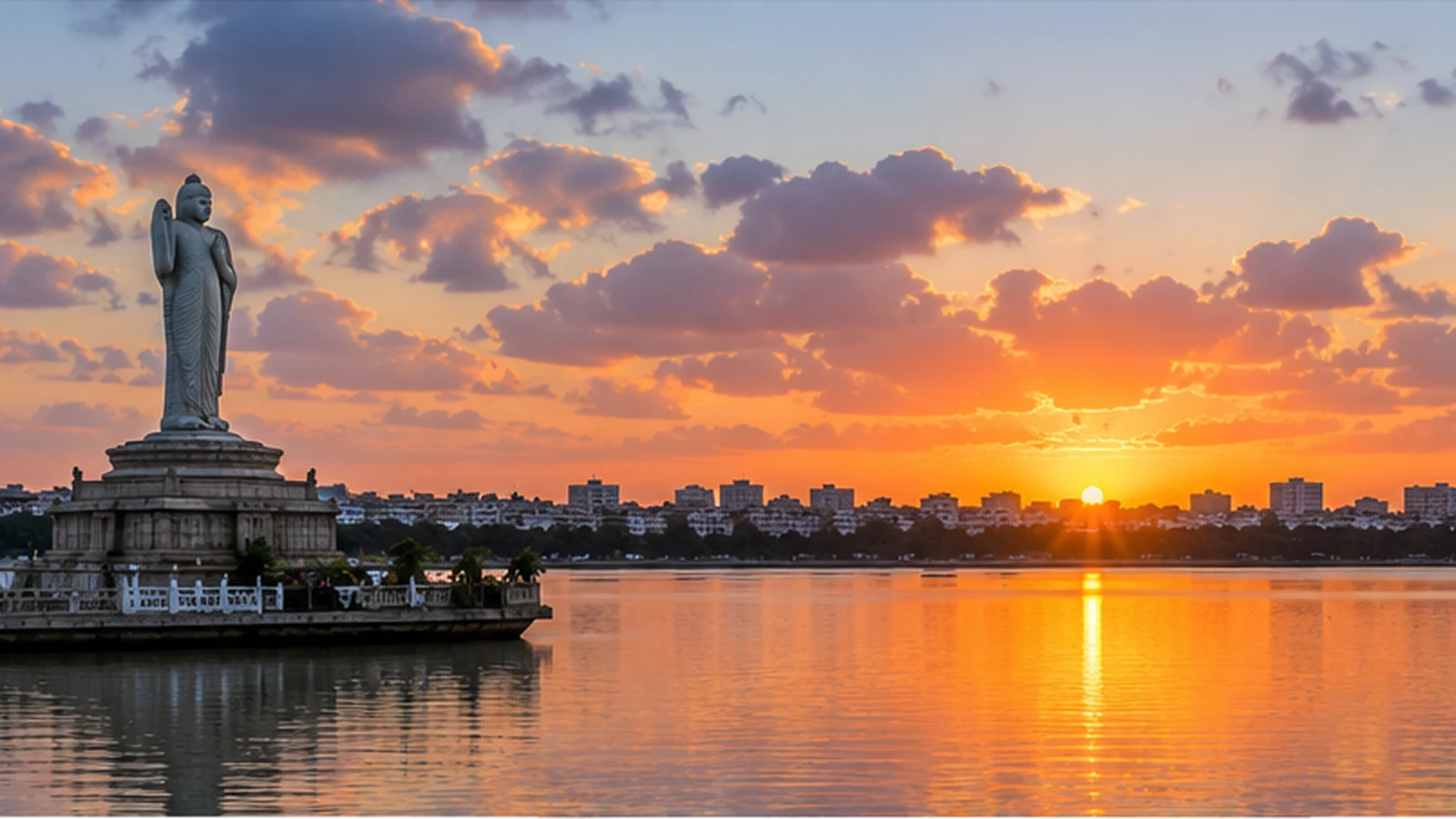
Hyderabad lies inland on the Deccan Plateau. Granite outcrops, low hills, tanks and artificial lakes have historically shaped its landscape. The Musi River passes through the older city, while Hussain Sagar lies between Hyderabad and Secunderabad. Continued urban growth has extended the built-up area far beyond the historic centre.
Administrative and planning boundaries are not interchangeable. Hyderabad district covers part of the metropolitan capital city. HMDA states that its jurisdiction, formed in 2008, originally covered 7,257 square kilometres; this figure applies to the planning region, not Hyderabad city alone.
The seasonal pattern below reflects India Meteorological Department climatology for 1991–2020. Conditions vary, so check current forecasts during heat, thunderstorms or intense monsoon periods.
Economy, education and innovation
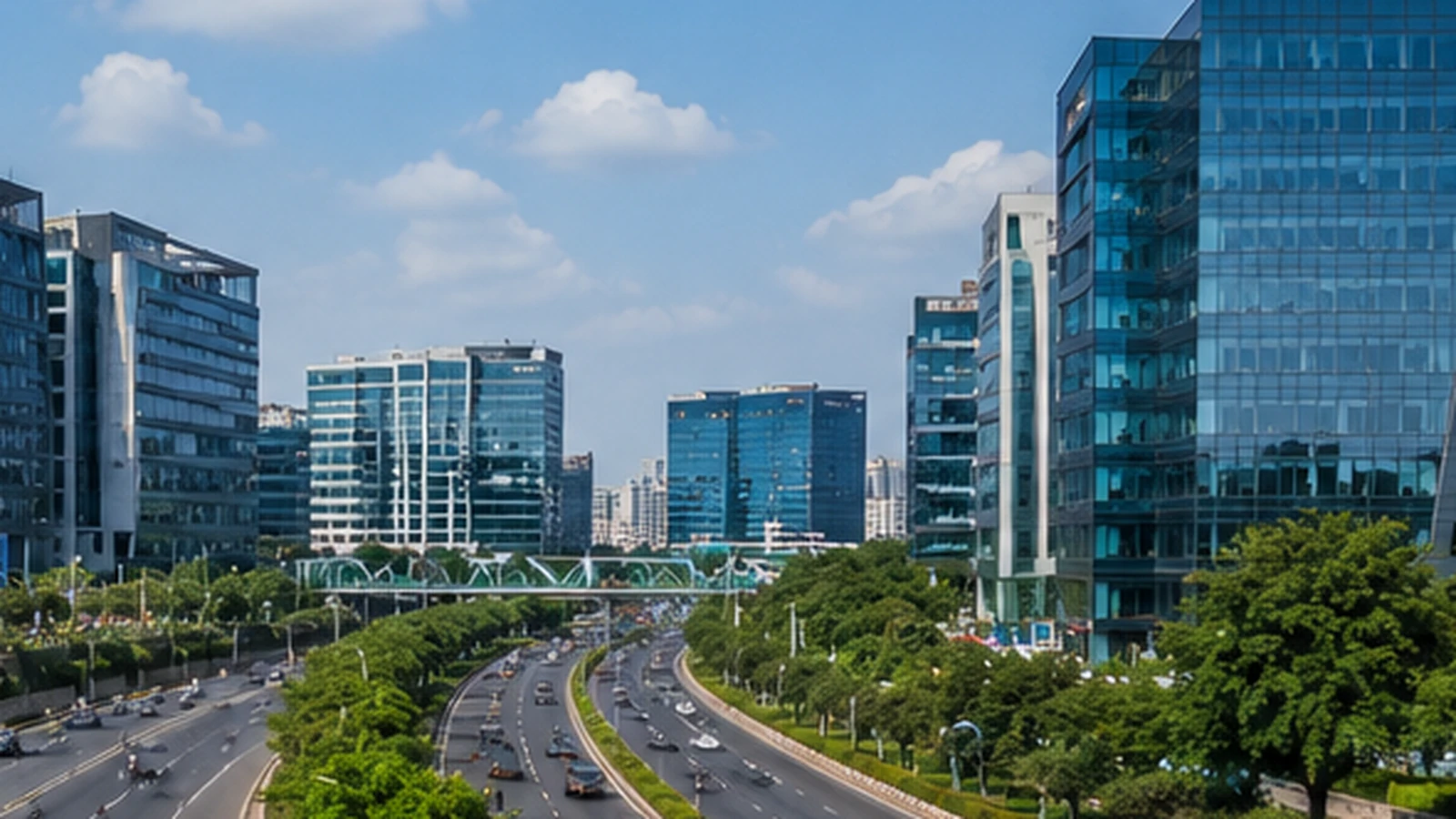
Hyderabad is a major centre for information technology and IT-enabled services. Employment clusters in Madhapur, HITEC City, Gachibowli, Nanakramguda and adjoining western districts contain technology companies, global capability centres, professional-services firms and startups.
The city and surrounding industrial region are also associated with pharmaceuticals, biotechnology, vaccines, medical devices and life-sciences research. Genome Valley and other clusters connect laboratories, manufacturers, research organisations and service providers. Sector rankings and investment totals change, so this guide avoids treating promotional figures as permanent facts.
Universities, scientific institutes, laboratories, hospitals and professional colleges serve students and researchers from across India. T-Hub, incorporated in Hyderabad in 2015, illustrates collaboration among entrepreneurs, industry, academia and government.
The economy is broader than technology and life sciences. Public administration, trade, construction, transport, tourism, healthcare, education, film, retail, food businesses and informal activity also support the metropolitan region.
Culture, food and everyday life
Major heritage sites include Charminar, Golconda Fort, the Qutb Shahi Tombs and Chowmahalla Palace. Streets around Charminar contain long-established markets for bangles, textiles, perfumes, jewellery and everyday goods. Historical links with pearl and diamond trading explain the popular name ‘City of Pearls’.
Food is central to Hyderabad’s public culture. Hyderabadi biryani is the best-known dish, but local eating traditions also include haleem, kebabs, khatti dal, bagara rice, mirchi ka salan, bakery biscuits, Irani chai and many vegetarian dishes. Some foods are seasonal or associated with particular communities, festivals or neighbourhoods.
Religious and cultural life is diverse. Mosques, temples, churches, gurudwaras and other institutions serve communities across the city. Major festivals may bring processions, crowds, road closures and temporary transport changes.
Visiting Hyderabad and getting around
Rajiv Gandhi International Airport at Shamshabad serves the metropolitan area and lies south of the central city. Hyderabad also has major railway stations, intercity bus services and extensive road connections. Journey times from the airport or across the metropolitan area can vary considerably with traffic and destination.
Hyderabad Metro Rail operates through three interconnected Phase I corridors, but it does not serve every attraction, outer employment district or the airport. Buses, selected suburban rail routes, taxis and app-based transport complement it. Check operators for current routes, fares and timings.
Group nearby places rather than crossing the city repeatedly. Charminar and its markets can form one outing; Golconda Fort and the Qutb Shahi Tombs another; Hussain Sagar a third; and the western technology corridor a separate visit.
- Carry drinking water and sun protection in hotter months.
- Allow extra road-travel time during peak periods.
- Check monument opening days, tickets and photography rules.
- During monsoon weather, avoid flooded roads and follow official advisories.
- Use official sources for current fares, schedules and access conditions.