
India’s Space Program
Introduction to India’s Celestial Journey
India’s space program, a testament to human ingenuity and national determination, has evolved from humble beginnings into a global powerhouse. Managed by the Indian Space Research Organisation (ISRO), the program has not only expanded our understanding of the cosmos but has also played a pivotal role in the nation’s socio-economic development. Since its inception in 1969, ISRO has consistently demonstrated that high-impact space exploration can be achieved with remarkable cost-efficiency.
The Genesis: From Bicycles to Rockets
The story of India’s space journey began in the early 1960s. Dr. Vikram Sarabhai, the founding father of the Indian space program, envisioned the use of space technology for the benefit of the common man. The first sounding rocket was launched from Thumba, a small fishing village in Kerala, in 1963. In those early days, rocket components were famously transported on bicycles and bullock carts, highlighting the modest resources but immense passion of the pioneering scientists.

Establishing ISRO and Early Milestones
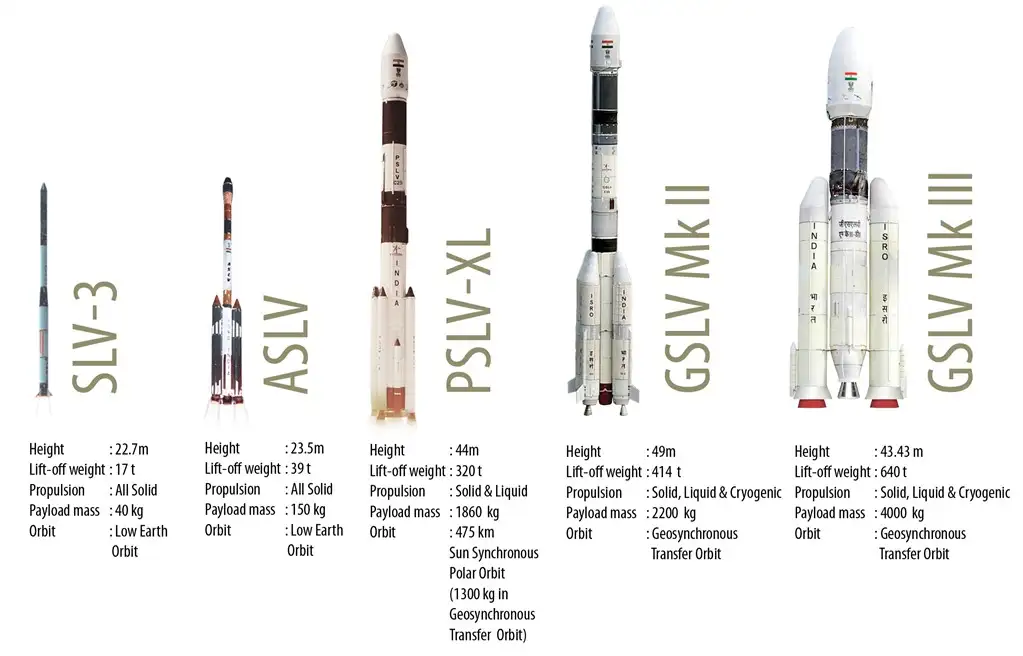
ISRO was formally established on August 15, 1969, superseding the Indian National Committee for Space Research (INCOSPAR). The 1970s marked the era of experimentation. India’s first satellite, Aryabhata, was launched in 1975 using a Soviet launch vehicle. This was followed by the development of the Satellite Launch Vehicle (SLV-3), which successfully placed the Rohini satellite into orbit in 1980, making India the seventh country to achieve indigenous launch capability.
The Workhorse: PSLV and GSLV
The development of the Polar Satellite Launch Vehicle (PSLV) in the 1990s was a turning point. Known as the ‘Workhorse of ISRO,’ the PSLV has a stellar track record of launching numerous Indian and foreign satellites. To carry heavier communication satellites into geostationary orbits, ISRO developed the Geosynchronous Satellite Launch Vehicle (GSLV), equipped with indigenous cryogenic engine technology, further solidifying India’s self-reliance in space.
Lunar Exploration: Chandrayaan Missions
India captured the world’s attention with its lunar missions. Chandrayaan-1, launched in 2008, played a crucial role in discovering water molecules on the lunar surface. Chandrayaan-2, though its lander faced a setback, successfully placed an orbiter that continues to provide valuable data. The historic success of Chandrayaan-3 in 2023 made India the first country to land a spacecraft near the lunar south pole, a feat that showcased ISRO’s resilience and technical prowess.
Reaching the Red Planet: Mangalyaan
In 2014, India made history by becoming the first nation to reach Mars on its maiden attempt. The Mars Orbiter Mission (MOM), also known as Mangalyaan, was completed at a fraction of the cost of similar missions by other space agencies. This achievement underscored India’s capability to execute complex interplanetary missions with precision and economy.
Future Horizons: Gaganyaan and Beyond
The future of India’s space program is even more ambitious. The Gaganyaan mission aims to demonstrate human spaceflight capability by sending a crew into orbit and bringing them back safely. Beyond human spaceflight, ISRO is planning missions to study the Sun (Aditya-L1), explore Venus (Shukrayaan), and establish a space station. These endeavors reflect India’s growing stature as a major player in the global space community.
Impact on Society and Economy
Beyond exploration, the space program has direct benefits for the Indian population. Satellite technology is used for tele-education, telemedicine, disaster management, and agricultural monitoring. The growing private space sector in India, supported by government initiatives, is expected to drive innovation and create thousands of jobs, contributing significantly to the national economy.
Way to Go
From the sands of Thumba to the craters of the Moon and the plains of Mars, India’s space program has come a long way. It is a journey defined by vision, perseverance, and a commitment to using science for the greater good. As ISRO looks toward the stars, it continues to inspire a new generation of scientists and engineers to dream big and reach for the impossible.